Hello everyone!
Happy New Year ! We are happy to resume contact with this first issue of the new year after a lively start. The winter break offered a chance to rest, while the immersive seminar held before the pause helped us consolidate ideas and set our scientific strategy for the next two years. In the meantime, a series of seminars with distinguished guests and strong participation has added further momentum to the beginning of the year.
Please be aware that starting from Thursday, February 12, the weekly seminar talk will be held on Thursday instead of Wednesday.
Landmark events
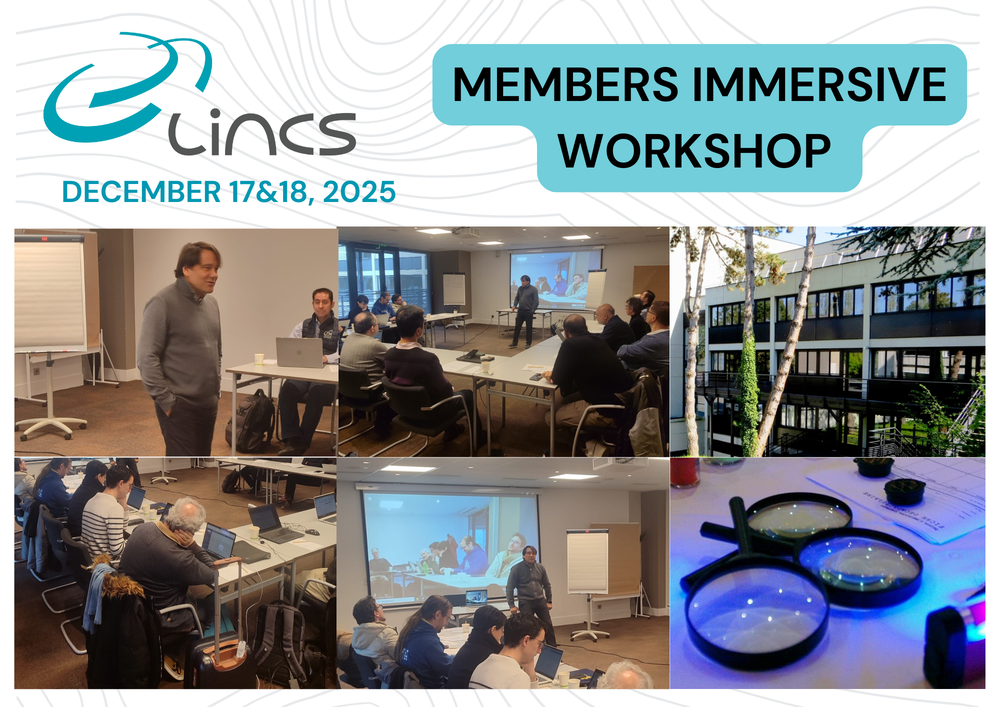
Recalling the Members Immersive Workshop
On December 17–18, the LINCS community gathered for two dynamic days of discussion and collaboration aimed at defining our shared scientific priorities.
We had a truly wonderful time, and the vibrant exchange of ideas and perspectives once again highlighted the strength and cohesion of our network. We would like to thank everyone who was there, as well as those who couldn’t attend due to teaching commitments or jury duties.
The outcomes of the plenary sessions and thematic working groups will soon be presented to the full community and will serve as the basis for shaping the LINCS two-year strategy through an inclusive, collective process.
All members are invited to continue the dialogue across the five key areas addressed during the workshop: AI & Networks, Security, Quantum, NTN, and Information Theory.
Major LINCS Events in 2026: Save the Dates
We are pleased to inform you that, during the most recent COMEX meeting, the dates for the major events of our lab for the coming months of this academic year were confirmed :
May 21 – PhD Student Day
Please, save the date of the 2026 edition of this event entirely dedicated to the PhD Students and Postdocs of the lab, and it consist of a part with elevator pitches, posters and brainstorming, a friendly lunch and a team-building activity held outdoors.
The purpose of this day is to provide our students and junior researchers with an opportunity to present their work, learn about the research of their peers, and receive valuable feedback from senior members of the LINCS.
July 2&3 – Annual Workshop with the Scientific Committee
Please, save the dates : as is tradition, we are pleased to invite you to the 2026 edition of this two-day event, featuring scientific highlights, surveys, elevator pitches, and posters from our scientific community, as well as one social night out.
Call for a Thematic Workshop Next Spring
As in previous years with workshops on AI, networks and cybersecurity, RIS, or vehicular networks, we warmly encourage you to propose and organize a thematic workshop next spring.
Call for Speakers for our Seminar Serie
Everyone is warmly invited to volunteer for a talk if you have work to share, or to suggest speakers for February-June 2026.
Newcomers
Marc-Olivier Renou as an Associated Member (Inria)

Marc-Olivier is a theoretical physicist and holds the Junior Professor Chair (Professeur Junior) at Inria Saclay, where he leads the PhIQuS research team in quantum information science at the interface between physics and computer science.
His research focuses on quantum correlations, quantum networks, distributed quantum computing, and device-independent quantum information processing, with a particular emphasis on noncommutative polynomial optimization and foundational aspects of quantum theory.
Before joining Inria Saclay in 2023, he was a Marie Curie fellow and Early Postdoc.Mobility fellow at ICFO (Barcelona) and conducted research stays including at ETH Zürich. He completed his PhD under the supervision of Nicolas Gisin at the University of Geneva.
Aslan Tchamkerten as an Associated Member (Télécom Paris)
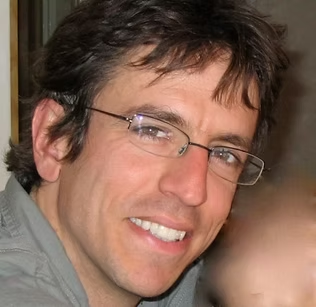
Aslan is an information theorist and a professor at Télécom Paris, part of the Institut Polytechnique de Paris, where he heads the Mathematics of Information and Communications (MIC) group.
He received his Master’s degree in physics and his Ph.D. from EPFL in 2000 and 2005, respectively. He completed a postdoctoral appointment at MIT between 2005 and 2008 before joining Télécom Paris.
In 2009, he was awarded a Chair of Excellence by the French National Research Agency. He spent the 2014–2015 academic year on sabbatical at Stanford University. In 2016, he co-organized the thematic program “Nexus of Information and Computation Theories” at the Institut Henri Poincaré. He served as an Associate Editor for the IEEE Transactions on Information Theory from 2016 to 2019 and from 2021 to 2024.
Shamisa Nematollahi as a Postdoctoral Researcher (TélécomSud Paris)
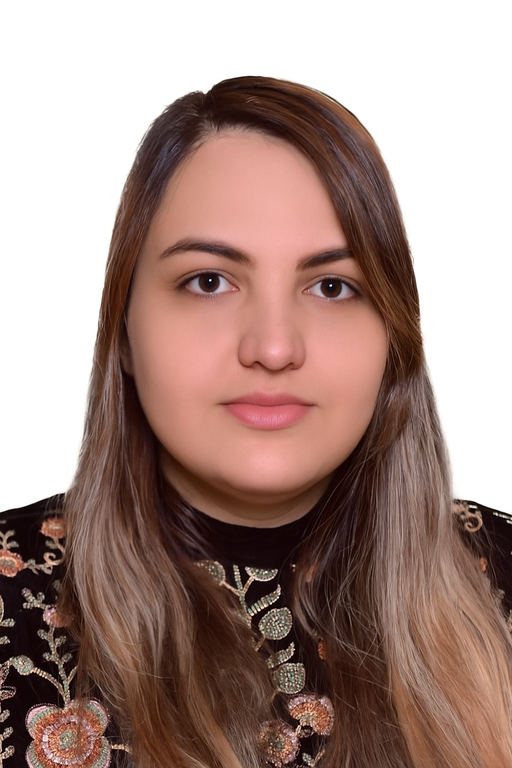
Shamisa recently defended his PhD at the Institut de Recherche en Informatique Fondamentale (IRIF, CNRS, Université Paris Cité) in the Algorithms and Complexity team, under the supervision of Adrian Vladu. Her research interests lie in combinatorial optimization and approximation algorithms, with a focus on submodular maximization, submodular welfare, and facility location problems.
As of January 2026, she joined Télécom SudParis as a Postdoctoral Researcher in Tijani Chahed’s team.
Shurok Khozam as a Ph.D Student (TélécomSud Paris & Sorbonne Université)
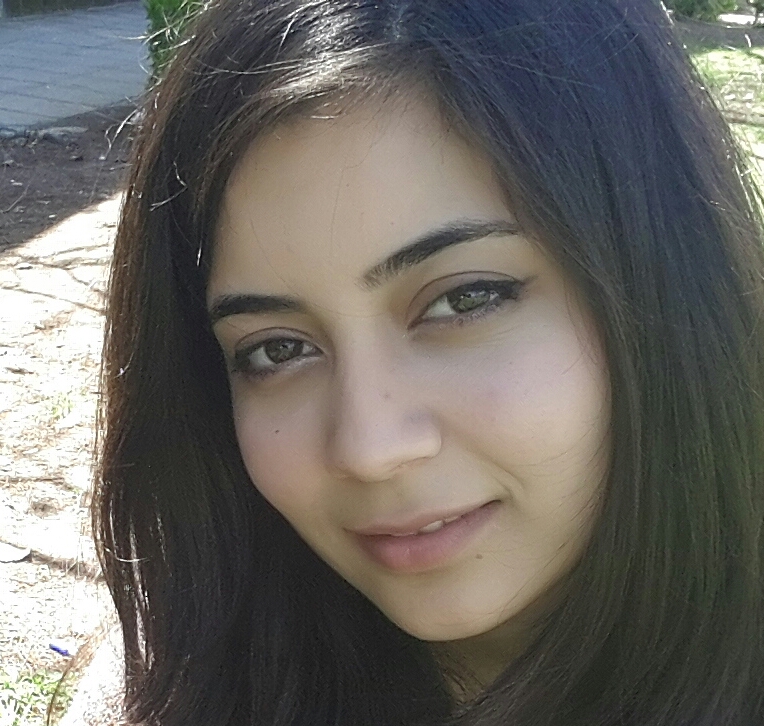
Shurok is a PhD student at Télécom SudParis, Institut Polytechnique de Paris. She obtained an engineering degree in computer engineering from Tishreen University and a Master’s degree in Intelligent Systems and Applications from Université Gustave Eiffel.
Her research focuses on the use of reinforcement learning and AI-driven programmability to improve network security, with a particular emphasis on QoS-preserving DDoS attack mitigation in software-defined and future networks.
Yue Yu as a Ph.D Student (TélécomSud Paris)
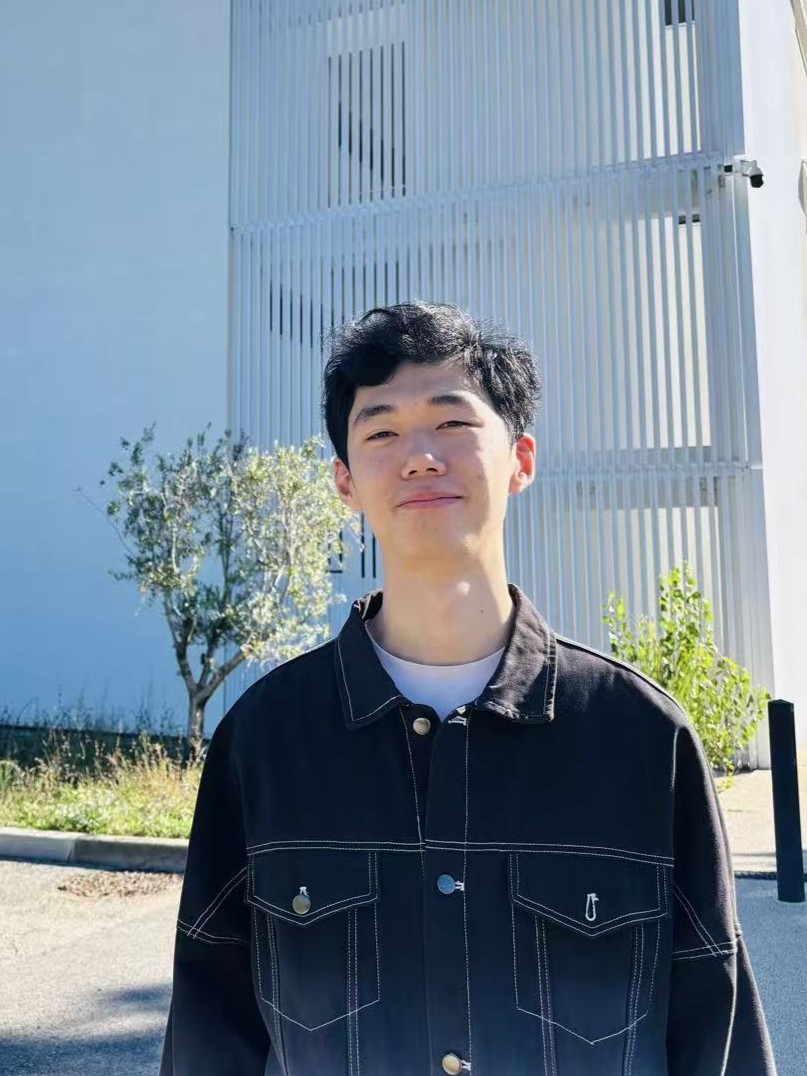
Yue is a PhD student at Télécom SudParis. He obtained his engineering degree from Centrale Méditerranée in applied mathematics for climate and environmental studies, along with a parallel master’s degree in statistics.
His research focuses on multi-agent decision making and stochastic modeling for sustainable edge computing infrastructures, with applications to energy-efficient and environmentally responsible 6G networks.
Amirmehdi FESHARAKI as a Ph.D Student (Télécom Paris)
Amirmehdi is a PhD student at Télécom Paris (Institut Polytechnique de Paris), working at the intersection of information theory and machine learning.
His research explores the connection between large language models and lossless data compression, with a focus on adaptive and online compression methods, transformer-based architectures, and the theoretical limits linking model complexity and compression efficiency.
He is particularly interested in moving beyond classical entropy coding by investigating AI-driven compression schemes inspired by modern LLMs. Amirmehdi received his Bachelor’s degree in Electrical Engineering from Sharif University of Technology and completed his Master’s (M2) at Télécom Paris in the MICAS program (Master in Information Processing: Machine Learning, Communications, and Security).
Ali Khalesi as a Guest Member (IPSA)
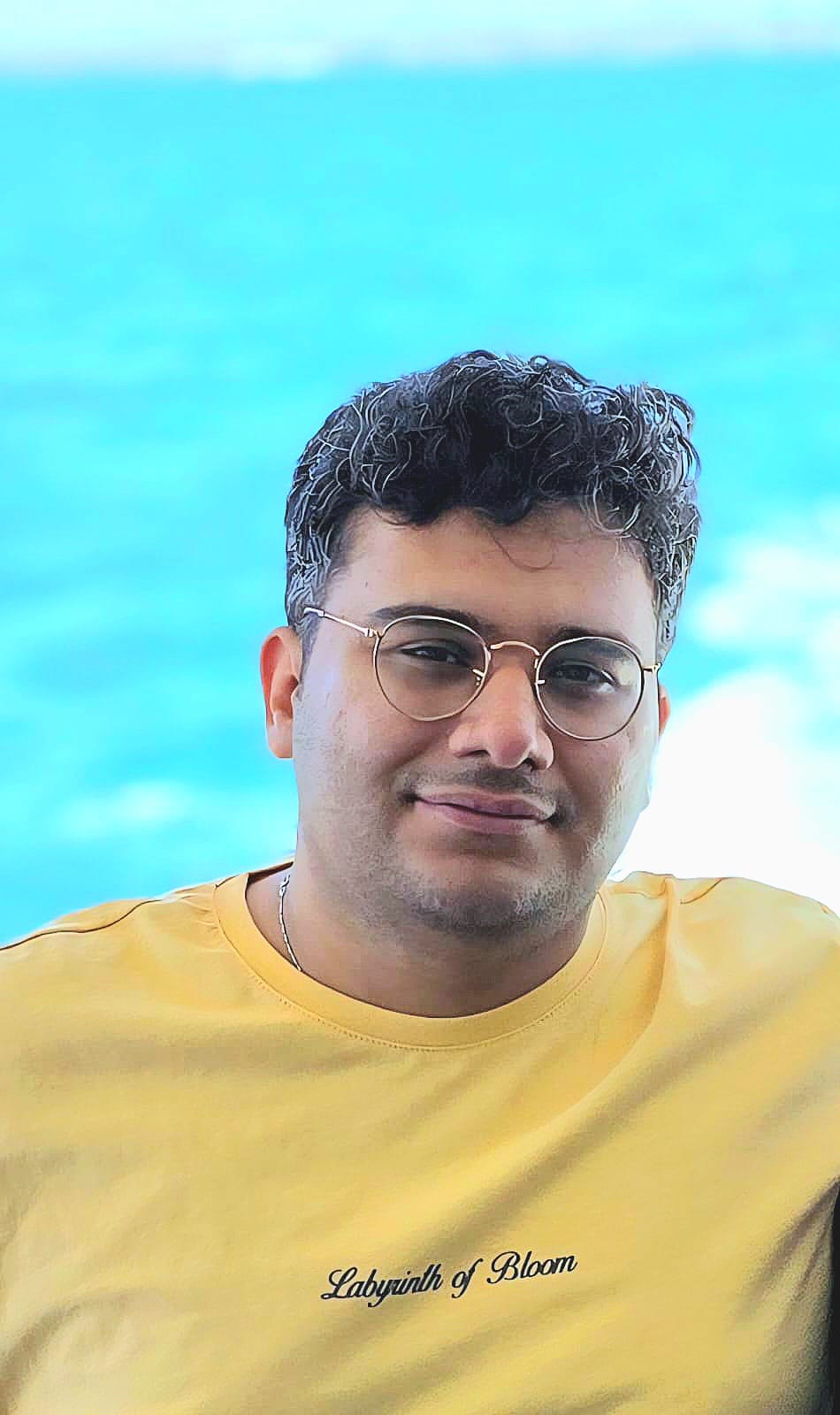
Ali earned his B.Sc. in Electrical Engineering (Telecommunications) from K. N. Toosi University of Technology, Tehran (2014–2018, with honors), and his M.Sc. in Electrical Engineering (Secure Telecommunications & Cryptography) from Sharif University of Technology, Tehran (2018–2020, with high distinction).
He received his Ph.D. in Telecommunications Systems from Sorbonne Université (EDITE) (2021–2024), with research carried out at EURECOM under Prof. Petros Elia. His Ph.D. thesis, “Multi-User Linearly-Decomposable Distributed Computing,” was shortlisted (semi-finalist) for the 2025 “Prix solennels” of the Chancellerie de Paris (Sorbonne Université), and he received the 2nd Prize of the EDITE Best Thesis Competition (2025).
His research focuses on the fundamental limits of distributed computing and learning algorithms, and on information-theoretic analysis of aeronautical and satellite communication systems, with emphasis on communication–computation trade-offs, coding-theoretic methods, and reliability/latency constraints.
He also serves as a reviewer for IEEE Transactions on Information Theory, IEEE Transactions on Communications, and IEEE/ACM Transactions on Networking, as well as major conferences including the IEEE International Symposium on Information Theory (ISIT) and the IEEE Information Theory Workshop (ITW). At IPSA, he teaches courses related to communication systems, digital signal processing, information theory, satellite communications, and distributed/networked systems, and supervises undergraduate and master-level student projects.